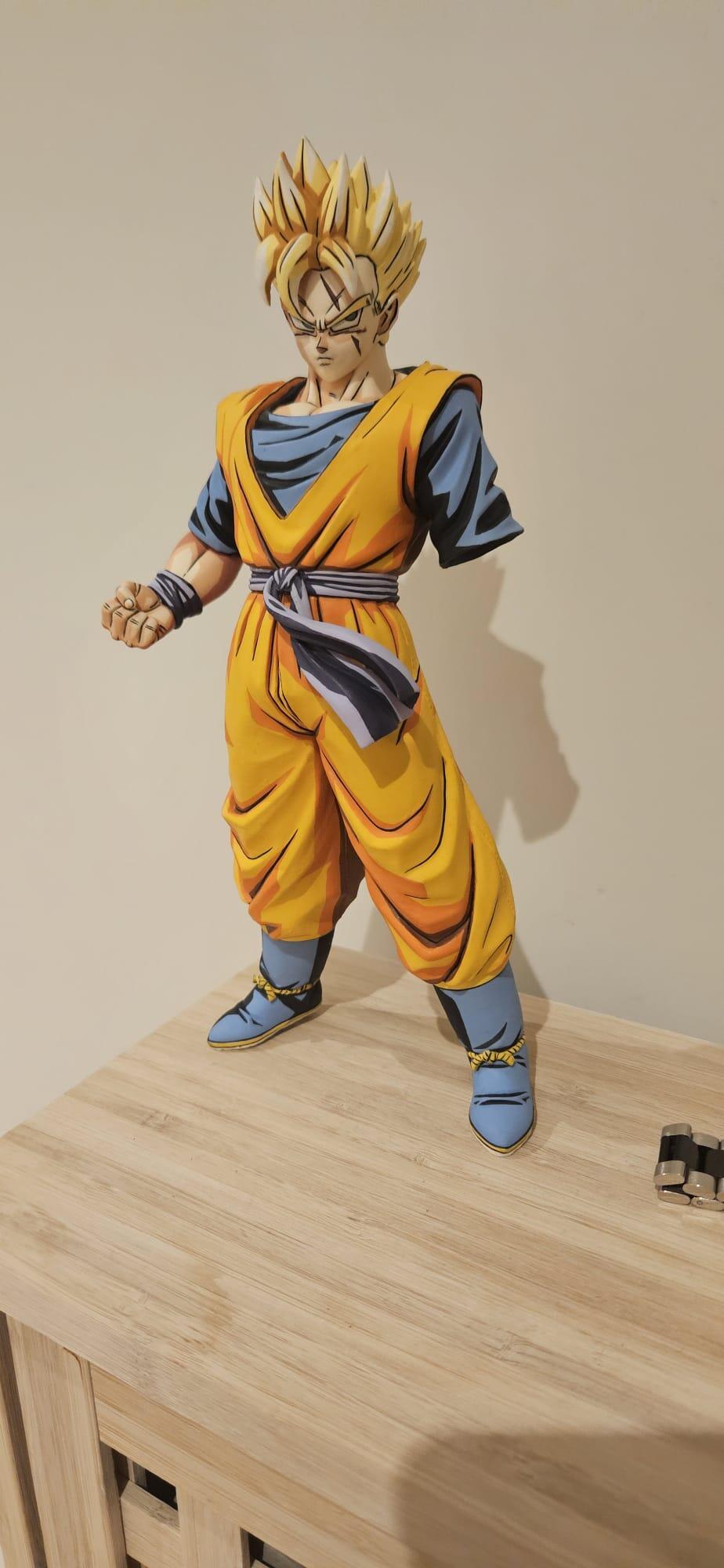
If you are searching for a repainting anime figure studio or an artist, you have probably realised something most guides do not mention: the painting quality is almost never the hard part of the decision.
Visually, dozens of studios produce repainted figures that looks great in photos. What separates a studio worth your money from one that will frustrate you is everything that happens around the painting — the communication, the payment process, the timeline, the way they handle problems, and what happens after you transfer the money.
This article comes from the inside of that world. It is written by a working repaint studio with 87% client retention and a 5-star average across 300+ reviews. It does not name competitors. It teaches you the standards every quality studio should meet — and the warning signs that show up before the trouble starts.
Table of Contents:
- Why quality studios are harder to find than they should be
- The seven criteria that separate quality studios from risky ones
- Communication: the single biggest predictor of a good experience
- Payment security: the issue most buyers do not think about until it is too late
- Delivery timelines: what is reasonable and what is a warning sign
- Pricing: why the cheapest option is rarely the safest
- Preview images and quality control before shipping
- Retention and reviews: the trust signals worth checking
- Red flags to walk away from immediately
- Frequently asked questions
Why Quality Studios Are Hard to Find?
The repainting anime figure space has grown faster than the trust infrastructure around it. Five years ago, most custom figure work happened locally — small communities, word-of-mouth recommendations, painters who knew their customers personally.
Today, repainting studios exist globally, accept international commissions, and process payments through platforms the buyer has no familiarity with. The growth has been good for the hobby. It has also produced a layer of low-trust operators who take advantage of buyers who do not know what to ask for.
The painters who do excellent work and treat their customers properly are still out there, in larger numbers than ever. The challenge for a buyer is knowing how to identify them — and that comes down to a specific set of criteria that quality studios share, almost without exception.

7 Criteria That Separate Quality Studios From Risky Ones
A quality repainting anime figure studio will meet most or all of these standards. A risky one will fail multiple criteria, often visibly, often before you commission them.
1. Customer Support/Communication:
- Good Studio - Regular updates, honest delays, accessible support
- Disappointing Studio - Silence after deposit, slow replies, vague answers
2. Payment Security:
- Good Studio - Trusted platforms/website, clear receipts, refund policies
- Disappointing Studio - Direct transfers, unclear refund terms, unusual payment methods
- Good Studio - Realistic timelines clearly stated, met or proactively updated
- Disappointing Studio - Vague timelines, repeated delays, no proactive communication
- Good Studio - Clear pricing, no surprise costs, fair market rates
- Disappointing Studio - Hidden costs, unusual upfront demands, prices well below market
- Good Studio - Photos shared for buyer approval before dispatch
- Disappointing Studio - Figure shipped without confirmation, no recourse for issues
6. Customer Retention:
- Good Studio - High repeat-customer rate, loyal client base
- Disappointing Studio - Few repeat customers, high turnover, complaints in reviews
7. Independent Reviews:
- Good Studio - Visible reviews on third-party platforms, high ratings
- Disappointing Studio - No reviews, hidden reviews, suspicious review patterns
The painting quality matters too, obviously. But painting quality alone is not enough to make a studio worth working with. The wrapper around the painting — the experience of being a customer — is what determines whether you finish the commission satisfied or frustrated.
✅ 1. Communication: The Single Biggest Predictor of a Good Experience
If you ask experienced repaint customers what went wrong with a bad commission, communication failure is almost always the answer.
We have heard the same story from at least ten of our own clients who came to us after bad experiences elsewhere — the studio took the deposit, sometimes the full payment, and then went silent. Weeks of unanswered messages. Vague replies when replies came at all.
No progress photos. No timeline updates. No honesty when delays happened. That silence is the single most damaging thing a repaint studio can do, and it happens more often than the wider hobby admits.
What quality communication actually looks like:
- A clear initial response that confirms the commission details and timeline
- Periodic progress updates without the customer needing to ask
- Proactive notification when anything changes — sourcing delays, technique adjustments, timeline shifts
- Honest communication when problems happen, not silence followed by excuses
- Accessible support throughout the project, not just during the sales conversation
At 2D Figure Painting, every commission gets regular email updates from start to finish. When sourcing a specific figure takes longer than expected, the customer knows within hours, not weeks. When a repaint decision needs the customer's input, we ask rather than assume.
When something goes wrong — and occasionally it does — we tell the customer immediately and offer solutions, not excuses. This is not exceptional service. This is what every quality studio should be doing. It is described as exceptional because most studios do not do it.
Questions worth asking before commissioning:
- How often will I receive updates during the project?
- What is your communication channel — email, Instagram DM, WhatsApp?
- What happens if the figure is delayed?
- Can I see examples of recent commission progress updates?
Studios that struggle to answer these questions clearly are studios that will struggle to communicate well during your commission.

✅ 2. Payment Security: Issue Buyers Do Not Think Until It Is Too Late
This is the area where buyers get hurt most often, and it is rarely discussed openly. We have had more than five clients come to us after being scammed by a single competing studio eg. "3dcustomstudio.com", paying for figures they never received, with no recourse, no refund, and no way to retrieve their money.
This is not rare in the wider repaint world. Studios that disappear with deposits are a real problem, and the reason it keeps happening is that buyers often do not understand which payment methods give them protection and which do not.
Payment methods that protect the buyer:
- PayPal Goods and Services — full buyer protection, dispute resolution, refund pathways
- Credit card payments via Shopify or similar — chargeback protection through the card issuer
- Stripe payments — buyer protection via the processor
- Reputable e-commerce platforms — built-in dispute resolution
Payment methods that leave the buyer exposed:
- PayPal Friends and Family — no buyer protection, no refund pathway if the studio disappears
- Bank transfers directly — almost no recovery possible if the studio refuses to refund
- Cryptocurrency — essentially unrecoverable
- Cash or wire transfers — same exposure as bank transfers
A studio that insists on Friends and Family PayPal or direct bank transfer is asking you to take on all the risk in the transaction. There is no reason a legitimate studio cannot accept secure payment methods. The studios that refuse are the ones you most need protection from.
At 2D Figure Painting, every transaction runs through our website's secure checkout. Customers pay through standard e-commerce processors that protect them. They receive receipts, confirmation emails, and full purchase records. If anything goes wrong, they have the same protections they would have buying from any major online retailer.
✅ 3. Delivery Timelines: What Is Reasonable and What Is a Warning Sign?
The repaint industry has a delivery problem that customers often do not realise until they are six months in. Many studios or artists quote three to six month timelines as standard. Some quote longer.
We have heard from customers who waited nine months — usually with no communication during the wait, no updates, and no clear sense of when the figure would actually arrive. That is not normal. It is industry-wide, but it is not normal.
Realistic timelines for a custom repaint:
- In-stock or pre-painted display pieces — 2 - 3 days to ship
- Custom commission requiring figure sourcing — 3 - 6 weeks subject to figure availability
- Multi-figure orders or figure design from scratch — 2 - 3 months realistically
A studio quoting six-plus months for a single standard repaint is either heavily overbooked, working part-time, or using vague timelines as cover for poor scheduling. None of those reasons are the customer's problem.
We work hard to keep our turnaround times shorter than the industry average without compromising painting quality. Most of our commissions ship significantly faster than the standard three-month figure quoted across the wider repaint world. When delays do happen — and they occasionally do, particularly for hard-to-source figures — customers know about it immediately, with a revised timeline and the reason.
Questions worth asking about timeline:
- What is your realistic timeline for this specific commission?
- What is your update policy if the timeline changes?
- What is your queue currently like?
- Can you share examples of commissions completed in similar timeframes?
A studio confident in their workflow will answer these questions clearly. A studio that gives vague answers is a studio that will give vague answers six months from now when you are asking where your figure is.
✅ 4. Pricing: Why the Cheapest Option Is Rarely the Safest?
Repaint pricing varies more than most new buyers expect. A custom Dragon Ball Vegeta repaint can range from £150 to £400 depending on the studio, the techniques used, the figure size, whether the source piece is a standard PVC release or a premium 3D-printed sculpt, and the experience of the painter.
Within that range, there is a sweet spot of fair pricing and two warning zones at the extremes.
The pricing landscape in the repaint industry:
- Below £100 for a full custom repaint — almost always a warning sign. Either the painter is inexperienced (which the customer is not told), or the work is rushed, or there is a hidden cost coming
- £100-£200 for a quality mid-size repaint — the realistic range for established studios producing collector-grade work
- £200-£400 for premium or complex commissions — appropriate for larger figures, more advanced techniques, or established painters with reputation
- £400+ for specialist or bespoke pieces — appropriate for top-tier studios with significant waitlists
What customers do not always realise: many studios sit at the higher end of these ranges by 20-30% compared to direct comparisons. Some of that is reputation pricing, which is fair. Some of it is taking advantage of buyers who do not shop around. Some of it is covering inefficient workflows.
We aim to sit in the fair middle of the market — pricing that reflects the actual time, materials, and skill involved, without the premium markup that some studios charge for the same level of quality. Customers see exactly what they are paying for, with no hidden costs, no surprise additions, and no inflated rates compared to comparable work elsewhere.
Questions worth asking about pricing:
- Is the price you quoted final, or are there additional costs (shipping, materials, taxes)?
- What does this price include in terms of techniques and finishing?
- What is your refund policy if I am not satisfied?
- Can you show me completed work at this price point?
A studio that gives transparent answers on pricing is a studio you can trust on other details. A studio that hedges on pricing is hedging on other things too.

✅ 5. Preview Images and Quality Control Before Shipping
This is one of the most underrated standards in the industry, and it makes a significant difference to customer satisfaction. Many studios paint the figure, pack it, and ship it. The customer sees the final result for the first time when the box arrives.
If something is wrong — a mismatched skin tone, a detail they wanted included, a sealing issue, a damaged element — the conversation about fixing it happens after the figure has already been shipped, which is the worst possible time to have that conversation.
- We send preview images of every completed figure before it ships. The customer sees exactly what they are paying for, has the chance to request adjustments, and confirms satisfaction before the figure goes into the courier system. By the time the figure arrives, there are no surprises and no disappointed unboxings.
This single practice has contributed significantly to our 98% satisfaction rate and our 5-star average across hundreds of reviews. It is also rare in the industry — most studios do not offer it. The studios that do are the ones that are confident in their work and confident in their communication.
Questions worth asking about quality control:
- Will I see the finished figure before it ships?
- Can adjustments be made if I am not satisfied with the result?
- What is your policy on shipping damage or transit issues?
- How do you handle disputes about the final quality?
A studio comfortable with previewing their work before shipping is a studio that has nothing to hide. A studio that resists this is hiding something — or simply not invested enough in customer satisfaction to do it.
✅ 6 - 7. Retention and Reviews: The Trust Signals Worth Checking
Numbers tell the story that marketing language cannot. Customer retention is the single most reliable trust signal in any service business. A studio with high repeat-customer rates is a studio whose customers want to come back. A studio with no repeat customers is a studio whose customers had reasons not to.
- At 2D Figure Painting, our retention sits at 87%. That means almost nine out of ten customers who commission us once come back for further work. That number cannot be faked, gamed, or marketed into existence — it reflects what customers do after they have already experienced the studio.
Independent reviews are the second-strongest signal. Reviews hosted on the studio's own website are easier to control. Reviews on third-party platforms (Trustpilot, Google Reviews, eBay feedback, dedicated platform review systems) are significantly harder to manipulate and therefore more trustworthy.
Our 300+ reviews across our review system maintain a 5.0/5 average. Customers can read these reviews directly on our reviews page without filtering, selection, or curation.
What to look for in studio reviews:
- Volume — at least 30-50 reviews to be statistically meaningful
- Recency — reviews from the last 6-12 months matter most
- Specificity — reviews mentioning specific commission details, not vague praise
- Distribution — a healthy mix of long detailed reviews and shorter confirmations
- Response patterns — does the studio respond professionally to negative reviews?
A studio with no reviews has no track record. A studio with hidden reviews is hiding something. A studio with curated reviews is curating your impression of them.
Red Flags to Walk Away from Paint Commission
These signals appear before the trouble does. Spotting them early saves the project, the money, and the figure.
❌ Slow or vague replies during the sales conversation
- If communication is poor before they have your money, it will be worse afterwards
- Studios that take days to reply to "can you confirm pricing?" will take weeks to reply to "Where is my figure?"
❌ Demands for Friends and Family PayPal or direct bank transfer
- There is no legitimate reason a studio needs to bypass buyer-protected payment
- The only reason to insist on unprotected payment is to remove the buyer's ability to recover their money
❌ Vague timelines or refusal to commit to dates
- "It will be done when it is done" is not a timeline
- Quality studios manage their queue and can give realistic dates
- Studios that cannot are studios that will not
❌ Pricing significantly below the market
- If a studio is charging £50 for work that should cost £250, something is wrong
- Either the work will be worse than they imply, or the studio will disappear, or there are hidden costs coming
❌ No visible reviews on independent platforms
- A working repaint studio accumulates reviews naturally over time
- A studio with no visible review history is either very new (which is risky in its own right) or hiding reviews for a reason
❌ Refusal to provide preview images before shipping
- A studio confident in their work shows the work before it ships
- A studio that ships without confirmation is hoping you accept whatever arrives
❌ Reviews mentioning the same recurring issues
- If multiple reviews mention silence after payment, missed deadlines, or items never arriving, those are not isolated incidents
- They are the pattern
When one or two of these red flags appear, the project may still be salvageable. When three or more appear, the studio is telling you what working with them will be like. Believe them.
👉 Dragon Ball Vegeta: Hand Painting Tutorial
Questions: Custom Figure Repaints
How do I know if a repainting studio is legitimate?
Look for high-volume independent reviews (Social Media, Trustpilot, Google Reviews, or platform-specific review systems), clear payment methods that include buyer protection, transparent communication during the sales conversation, and a visible portfolio of completed work. Studios that fail these basic checks are studios to avoid.
What is a fair price for a custom anime figure repaint?
For a mid-size custom repaint from an established studio, £150-£250 is the realistic fair-price range. Below £100 is usually a warning sign of inexperience or hidden costs. £300-£400 is appropriate for larger figures, advanced techniques, or premium studios. Anything above that range is specialist or reputation-based pricing.
How long should a custom figure repaint take?
A standard mid-size custom repaint should take 4-8 weeks from a studio working efficiently. Sourcing-dependent commissions can take 3-8 weeks. Complex multi-figure or bespoke work can take 2-3 months. Anything beyond six months for a single standard repaint is a sign of poor workflow or overbooking.
What should I do if a studio goes silent after I have paid?
If you paid through PayPal Goods and Services, file a dispute through PayPal within 180 days of the transaction. If you paid by credit card, contact your card issuer for a chargeback.
If you paid by bank transfer or Friends and Family PayPal, recovery is significantly harder — document everything, contact your bank, and consider reporting to consumer protection authorities in the studio's country.
Is it safe to commission figures from international studios?
Yes, if the studio meets the criteria covered in this article. Many of the best repainting anime figure studios operate internationally. The key is verifying communication, payment security, reviews, and timelines before commissioning — not the geographic location.
What payment method is safest for commissioning a repaint?
PayPal Goods and Services and credit card payments through reputable e-commerce processors (Shopify, Stripe) offer the strongest buyer protection. Direct bank transfers, PayPal Friends and Family, and cryptocurrency offer almost no recourse if something goes wrong. The studio's preferred payment method tells you a lot about how they expect the transaction to go.
How can I tell good painting quality from average painting quality?
Quality signals in figure repainting include: clean face and eye work with sharp definition, consistent paint coverage with no visible brush strokes, proper cel-shading or smooth blending depending on style, defined edge highlighting, no chipping at joints, and a clean matte or appropriately glossy sealed finish.
Compare the studio's work to the anime or reference source — the closer the match, the better the technique.
Should I commission from a studio with no reviews?
Generally no, unless you accept the risk that comes with being one of their first customers. A studio with no review history has no proven track record. If you do commission a new studio, use the most buyer-protected payment method available and keep the commission small until you have seen their work.
Conclusion: Repainting Anime Figure Studio
The best repainting anime figure studios are not the ones with the loudest marketing or the lowest prices. They are the ones who communicate clearly, accept secure payment, deliver on realistic timelines, share previews before shipping, and have the customer retention to prove that their service works long after the figure arrives.
Most quality issues in this industry are not painting problems. They are trust problems. A studio that paints beautifully but disappears after payment is worse than a studio that paints adequately and treats every customer professionally. The wrapper around the work matters as much as the work itself.
At 2D Figure Painting, we built the studio around the standards covered in this article — regular communication, secure payment, fair pricing, preview confirmation, and the customer experience that earned us our 87% retention and our 5.0/5 average across 300+ reviews.
Share:
How to Paint Anime Figures: First Time Painter Guide
Figure Painting Workshop: Learn To Repaint Vegeta In 2D Style